Gothic Living Room That Feels Composed, Not Decorated
Gothic Living Room That Feels Composed, Not Decorated
A room shifts the moment it stops trying to impress and begins to hold weight.
Gothic interiors are not assembled—they accumulate. The difference is subtle but decisive: one feels arranged, the other inevitable. What follows is not decoration, but calibration. Each step removes noise and restores gravity.
Step 1 Establish Depth at the Surface
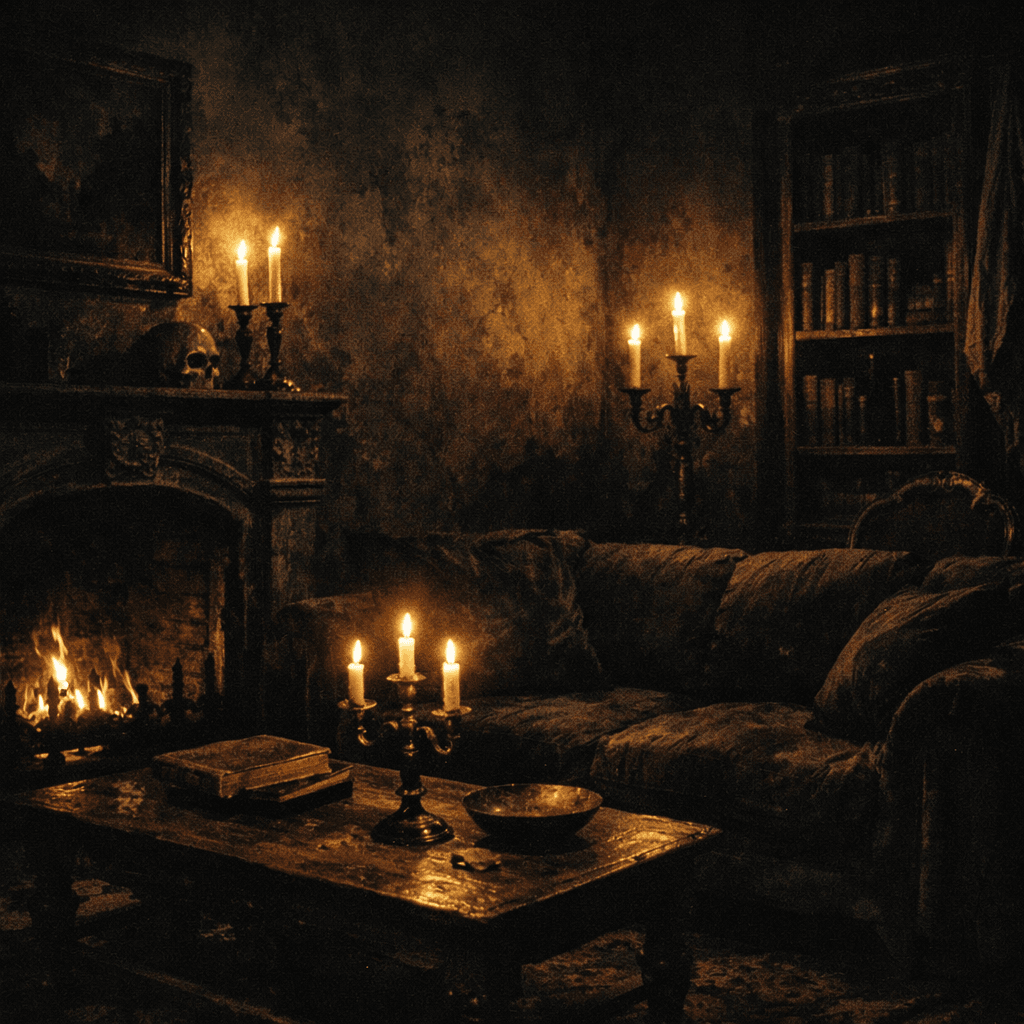
Before objects, before furniture—the room must absorb light correctly.
Flat or matte surfaces prevent glare and allow shadows to settle. Gloss interrupts atmosphere; it reflects instead of holding. Depth is created when light disappears into the surface rather than bouncing off it.
Work within restrained tones: charcoal, deep brown, muted green. Even one wall treated correctly can shift the entire room into coherence.
Step 2 Anchor the Room With Weight
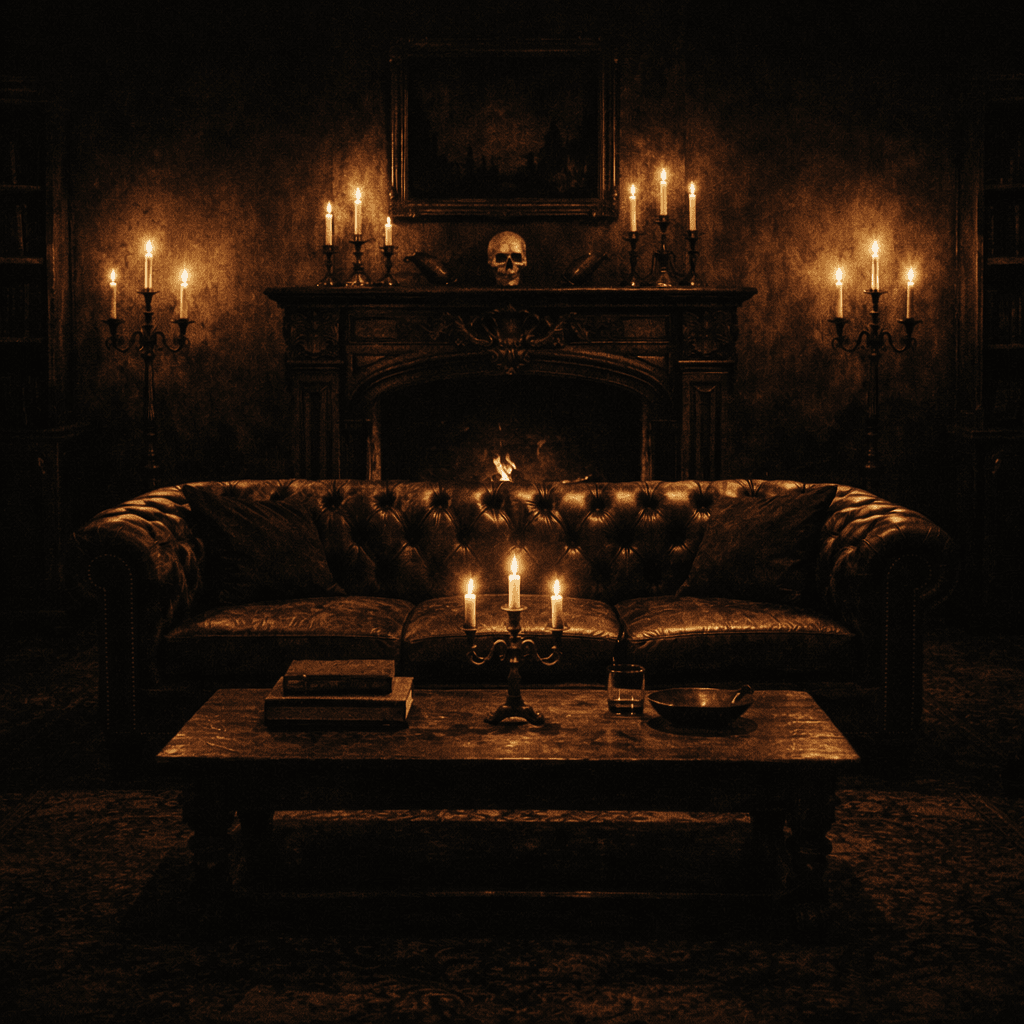
Every room requires a point of gravity.
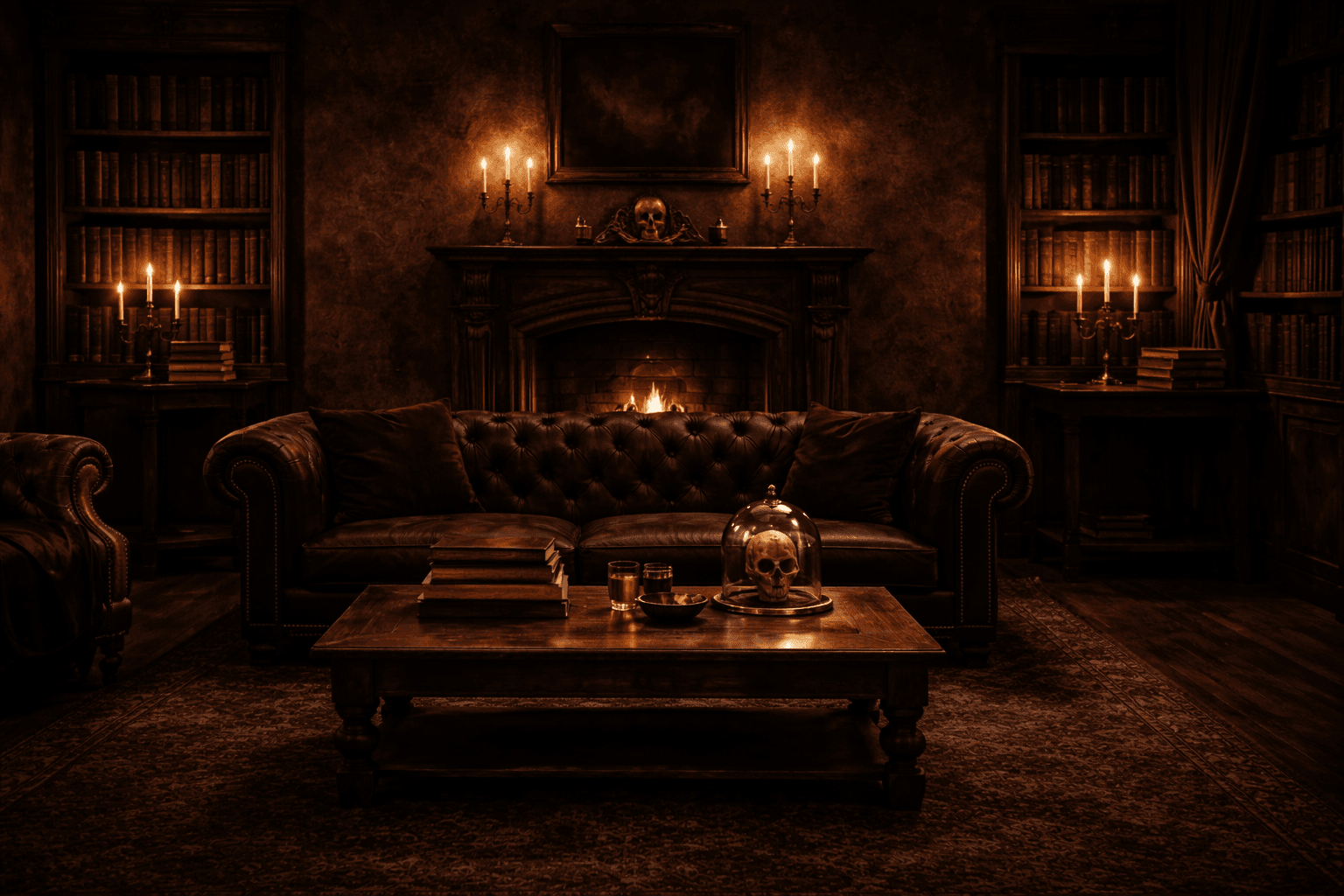
This is not about size alone—it is about visual density. A tufted leather or velvet sofa, a carved mantel, or a grounded cabinet establishes permanence. Without it, the room drifts.
Avoid anything that feels temporary: thin legs, pale woods, lightweight silhouettes. Gothic spaces depend on visual mass. The anchor should feel older than the rest of the room.
A set of solid stone bookends introduces weight without ornament. The material carries its own authority—dense, quiet, and immovable. Placed beside or beneath the room’s anchor, it reinforces a sense of permanence rather than decoration.
Step 3 Build the Room in Layers, Not Pieces
A furnished room is not yet a finished one.
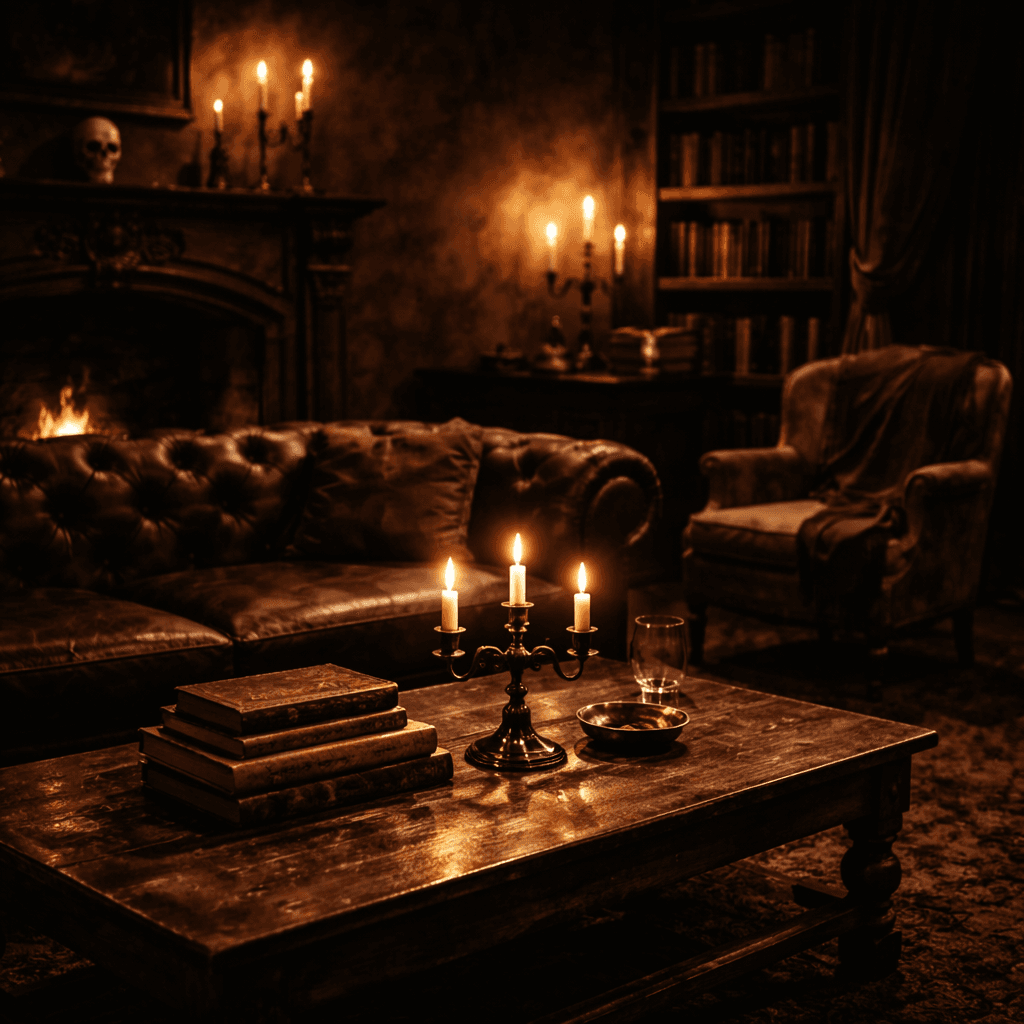
Layering introduces hierarchy. A low table grounds the center. A secondary chair offsets symmetry. Surfaces carry quiet detail—books, objects, traces of use.
Think in planes:
Floor → Furniture → Surfaces → Objects
If everything sits on one level, the room flattens. Depth is built through staggered presence, not accumulation.
Step 4 Introduce Material Contrast
Atmosphere depends on friction between materials.
Soft against hard. Dull against reflective. Worn against intact.
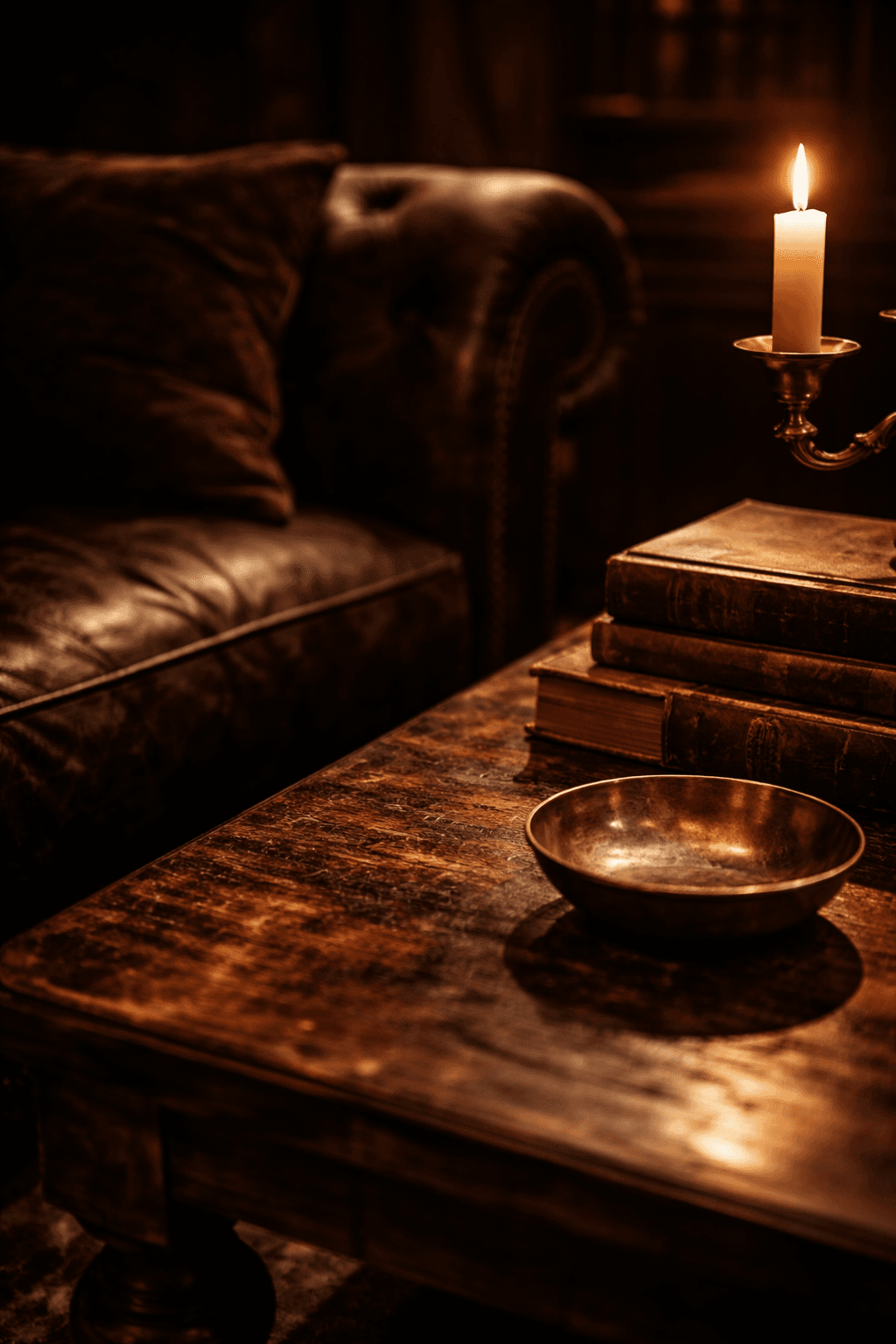
A single well-resolved contrast—a velvet surface against aged wood, or brass against matte plaster—creates more tension than multiple unrelated objects. Texture replaces quantity.
A solid brass bookmark introduces a quiet shift in material. Its thin profile catches light subtly against paper and wood, creating contrast without adding weight. The effect is restrained—more presence than object.
Step 5 Curate Objects That Suggest Time
Rooms collapse when everything feels purchased at once.
Objects should imply sequence. A stack of books. A framed print slightly misaligned. A small curiosity placed without ceremony.
Symmetry is the enemy here. Slight imbalance introduces realism.

Step 6 Refine the Palette Until It Holds
Gothic interiors are not dark—they are controlled.
Limit the palette to a narrow band:
Black and charcoal
Deep brown
Muted brass
Occasional restrained color (deep red or green)
Too many tones fracture the atmosphere. Consistency allows contrast to read as intentional rather than accidental.
Step 7 Leave Space for Shadow
Restraint is what makes the room believable.
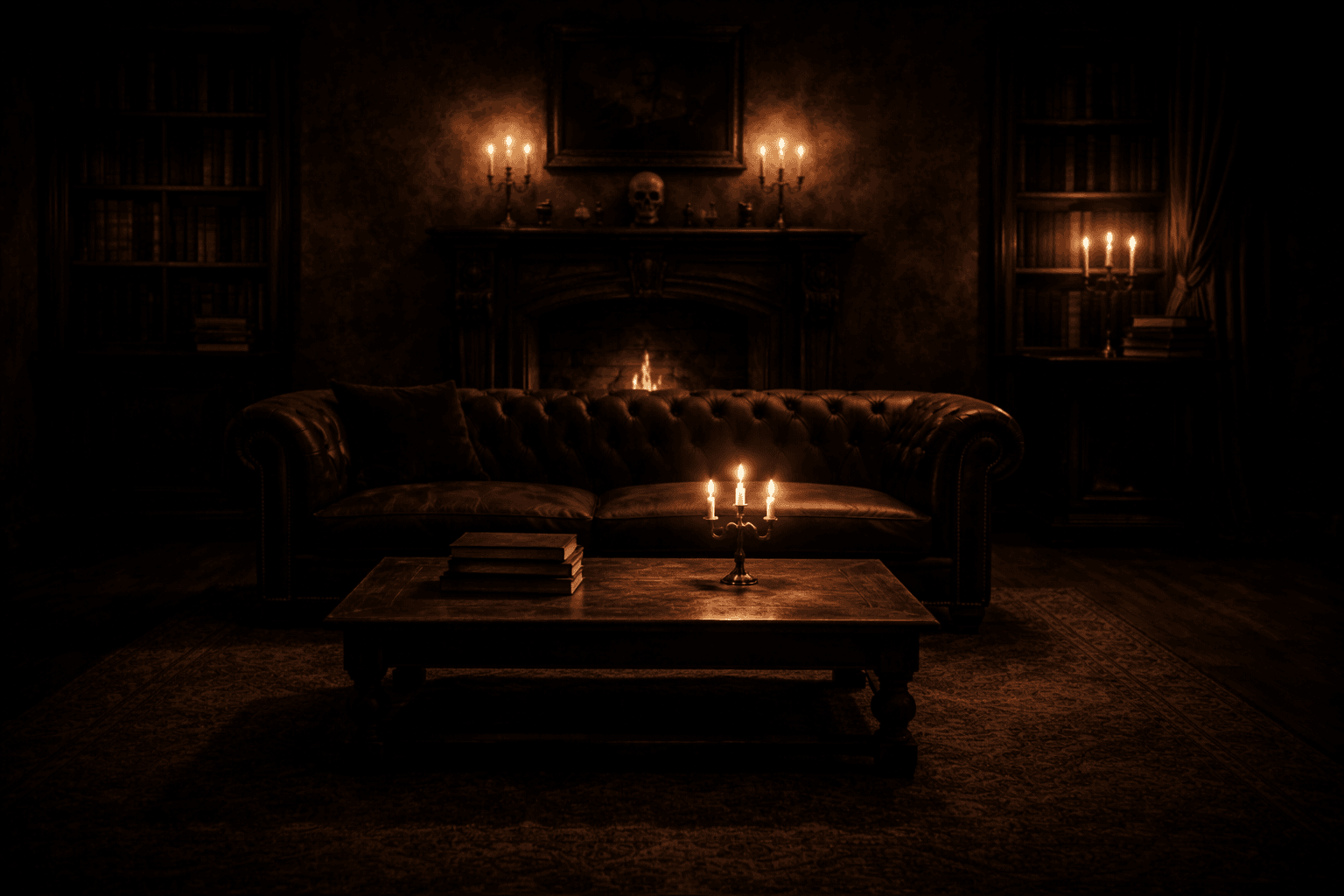
Not every surface needs occupation. Empty space allows the eye to rest—and more importantly, allows shadow to exist.
A room that is too full feels staged. A room with space feels inhabited.
A set of black taper candles introduces vertical rhythm without adding visual weight. When unlit, they recede into the room; when lit, they define it through shadow. The effect is quiet—presence shaped by absence.
Final Observation
A gothic living room is not completed—it settles.
Each addition should feel slower than the last. Each removal more decisive. Over time, the room begins to hold itself.
For foundational alignment, revisit:
Start Here — 7-Step Gothic Room Transformation Plan
The result is not a styled space, but a room that no longer needs to explain itself.