How to Begin a Gothic Interior Without Replacing Everything
A room does not need to be replaced to change.
Most spaces feel unsettled not because they lack decoration, but because too much remains. Objects compete, materials disagree, and light reveals everything at once.
A gothic interior begins differently.
It is not added, it is uncovered.
Step 1 Remove Before You Replace
Principle: Atmosphere begins with reduction.
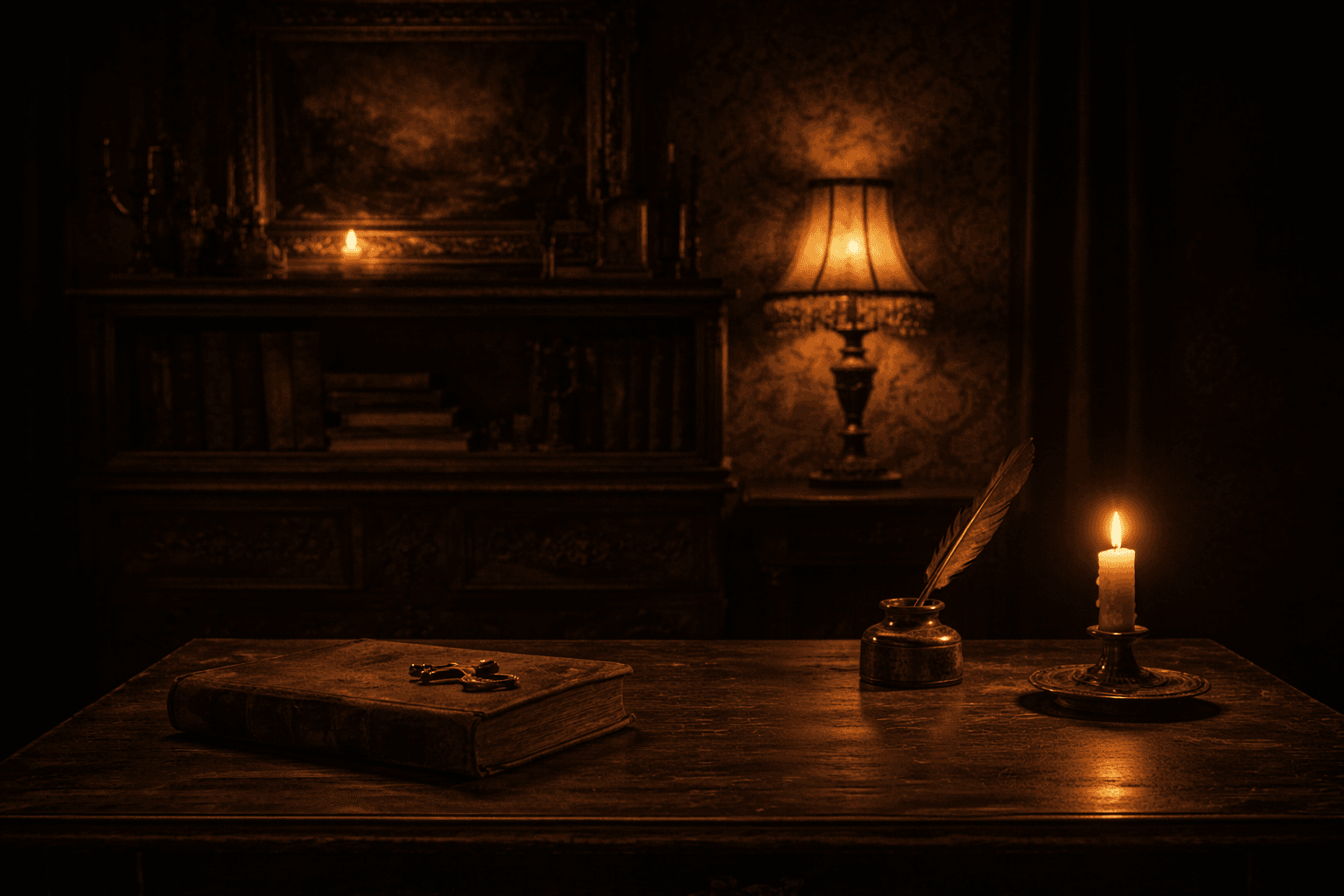
The instinct is to add darker colors, heavier objects, more detail. But a room cannot hold weight if every surface is already occupied.
Execution:
Clear one surface completely
Remove anything bright, reflective, or visually inconsistent
Keep only what feels materially grounded
A room changes as soon as it stops presenting everything at once.
Step 2 Let Materials Do the Work
Principle: Materials carry more presence than color.

Gothic interiors are often reduced to palettes black, burgundy, deep green. But color alone does not create depth.
It is the surface that matters.
Wood that absorbs light. Paper that softens it. Fabric that holds it.
Execution:
Limit the room to a small set of materials
Avoid mixing glossy and matte finishes in the same area
Let texture create variation instead of color
When materials align, the room begins to feel stable.
Step 3 Reduce the Light
Principle: Light defines the room more than anything placed within it.
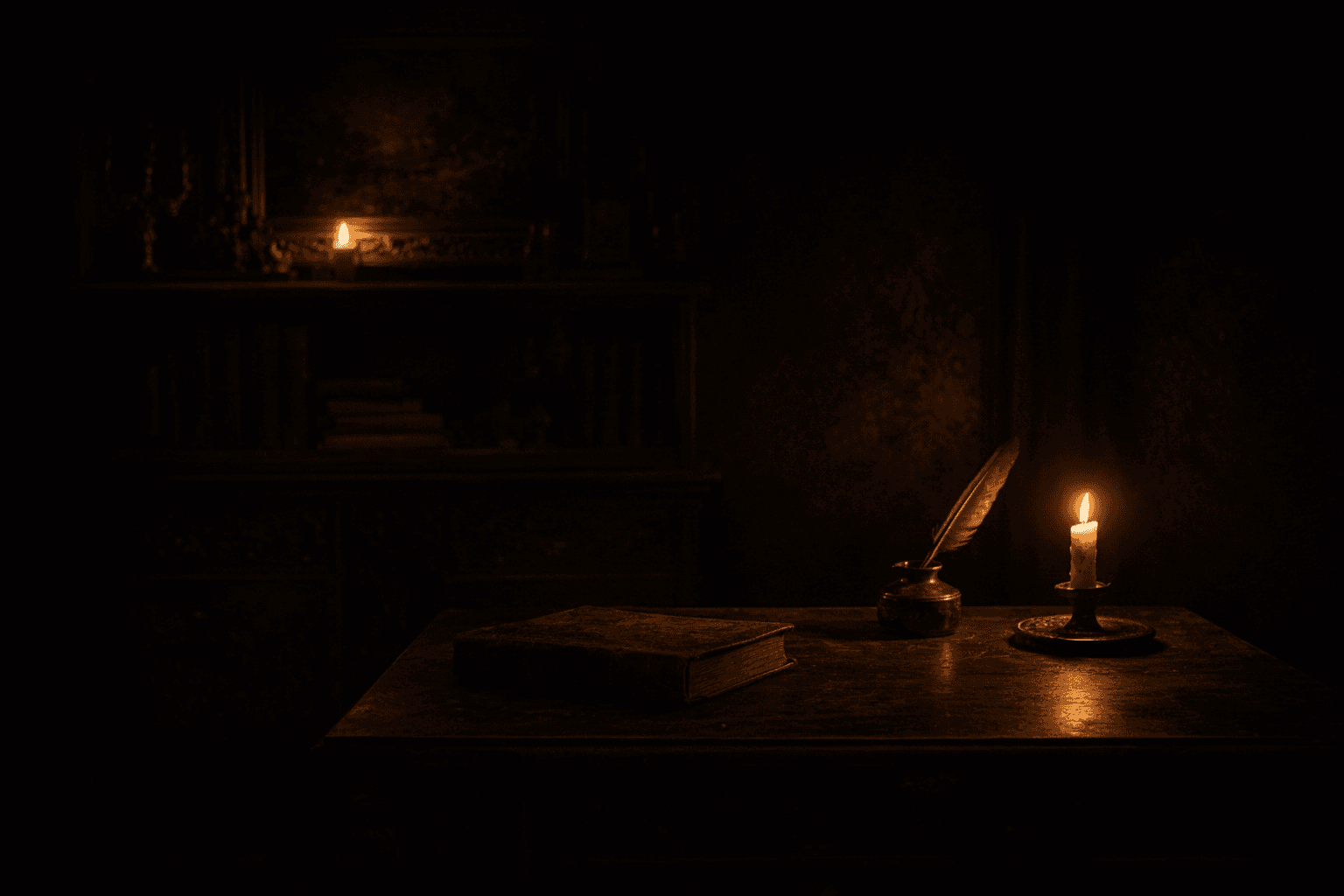
Most interiors are overlit. Every corner is visible. Nothing holds shadow.
A gothic space does not increase lighting, it controls it.
Execution:
Turn off overhead lighting where possible
Allow one area at a time to hold illumination
Let surrounding areas fall into shadow
When everything is visible, nothing holds attention.
Step 4 Keep Fewer Objects Than You Think
Principle: Objects should feel kept, not arranged.
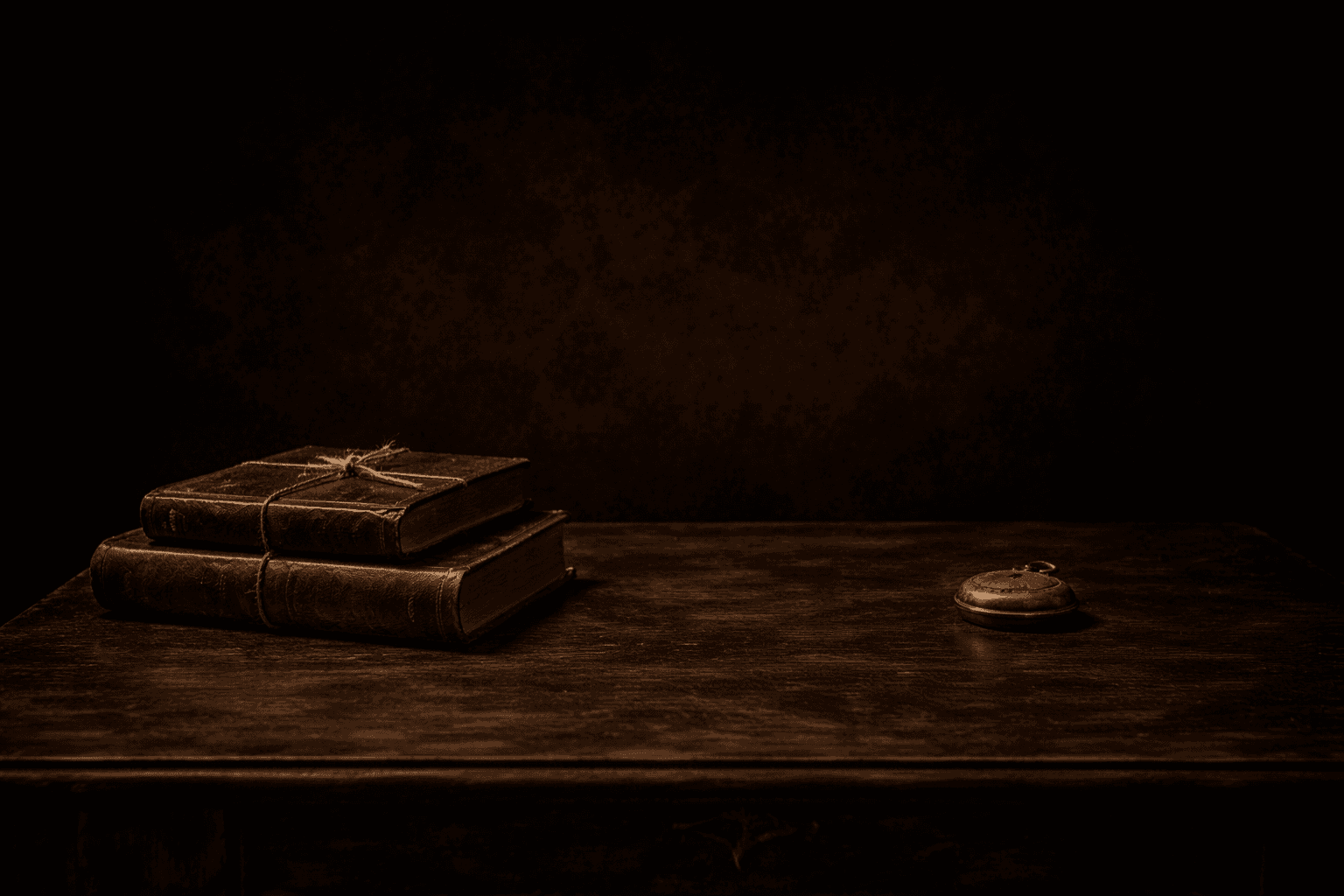
A gothic interior is not defined by what is added, but by what remains after editing.
Some objects remain because they justify their presence over time.
A leather-bound journal like this does that without drawing attention.
Too many objects flatten the space. Too few and chosen carefully, allow each one to hold weight.
Execution:
Limit each surface to a small number of items
Avoid symmetry and perfect spacing
Favor objects that suggest use over decoration
A single object placed well will carry more presence than several placed to be seen.
Step 5 Let the Room Form Slowly
Principle: Atmosphere cannot be rushed.
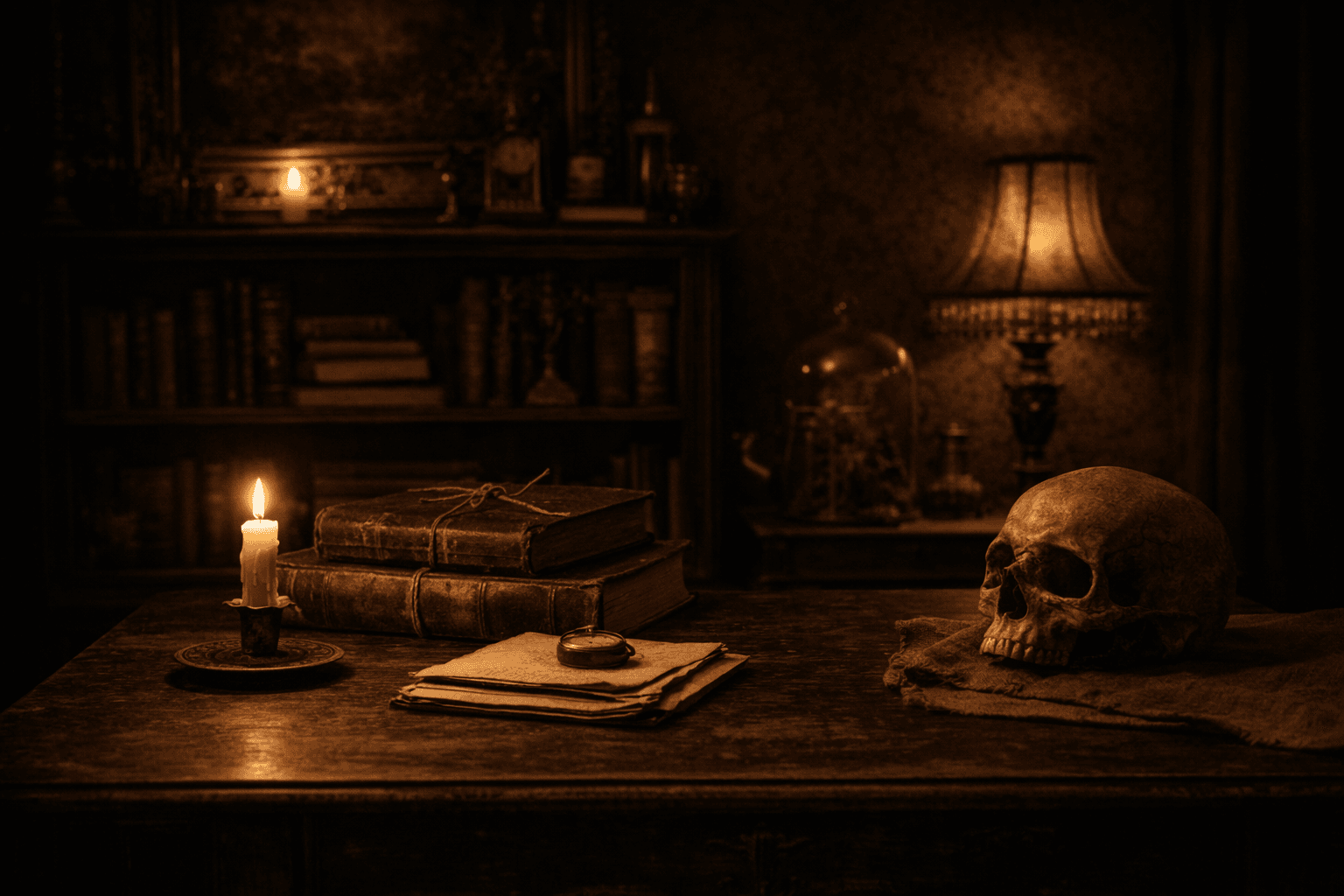
The strongest interiors are not assembled in a day. They emerge as decisions are made, removed, and refined over time.
Trying to complete a room too quickly leads to decoration. Allowing it to remain unfinished creates something more durable.
Execution:
Make one change at a time
Live with it before adding more
Remove anything that begins to feel unnecessary
A room settles when nothing feels recently introduced.
Closing Note
A gothic interior is not defined by darkness, but by control.
When materials align, light is contained, and objects are reduced to what matters, the room no longer asks for attention. It holds it.