Shaping a Gothic Bedroom That Feels Quiet and Intentional
A bedroom holds more weight than any other room.
It is where space closes in, where light lowers, and where nothing can be hidden behind distance.
Most interiors fail here. Not because they lack decoration, but because they reveal too much at once.
A gothic bedroom begins with restraint.
It is not built. It is reduced.
Step 1 Reduce the Bed, Don’t Decorate It
Principle: The bed is not a display.
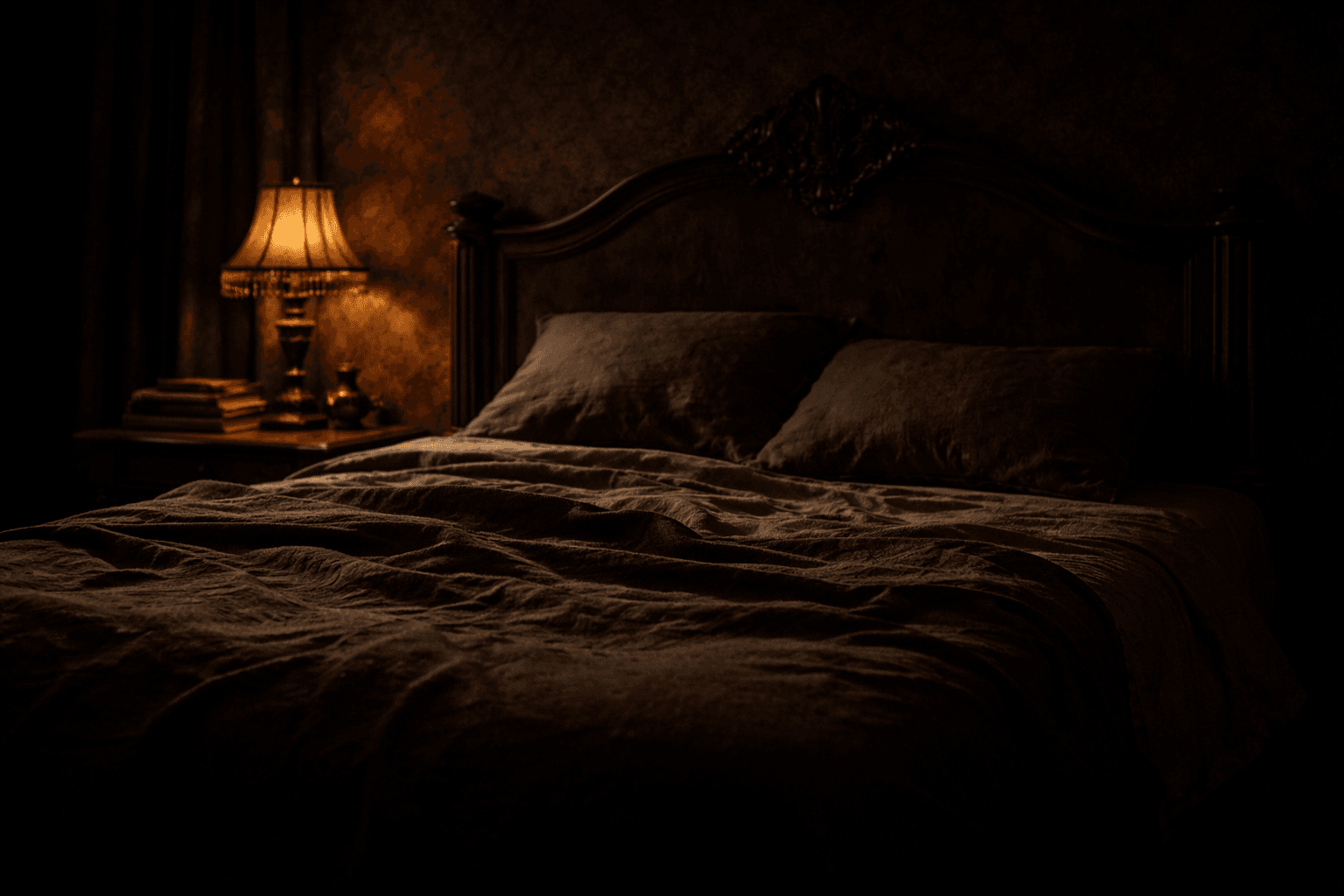
A bed layered with too many elements becomes the loudest object in the room. It draws attention instead of holding it.
In a gothic interior, the bed should recede slightly. It should feel present, but not staged.
Execution:
Limit the number of visible layers
Keep tones close and subdued
Favor materials that absorb light rather than reflect it
When the bed stops competing, the room begins to settle.
Step 2 Control the Light at Its Source
Principle: The bedroom should never be fully visible.
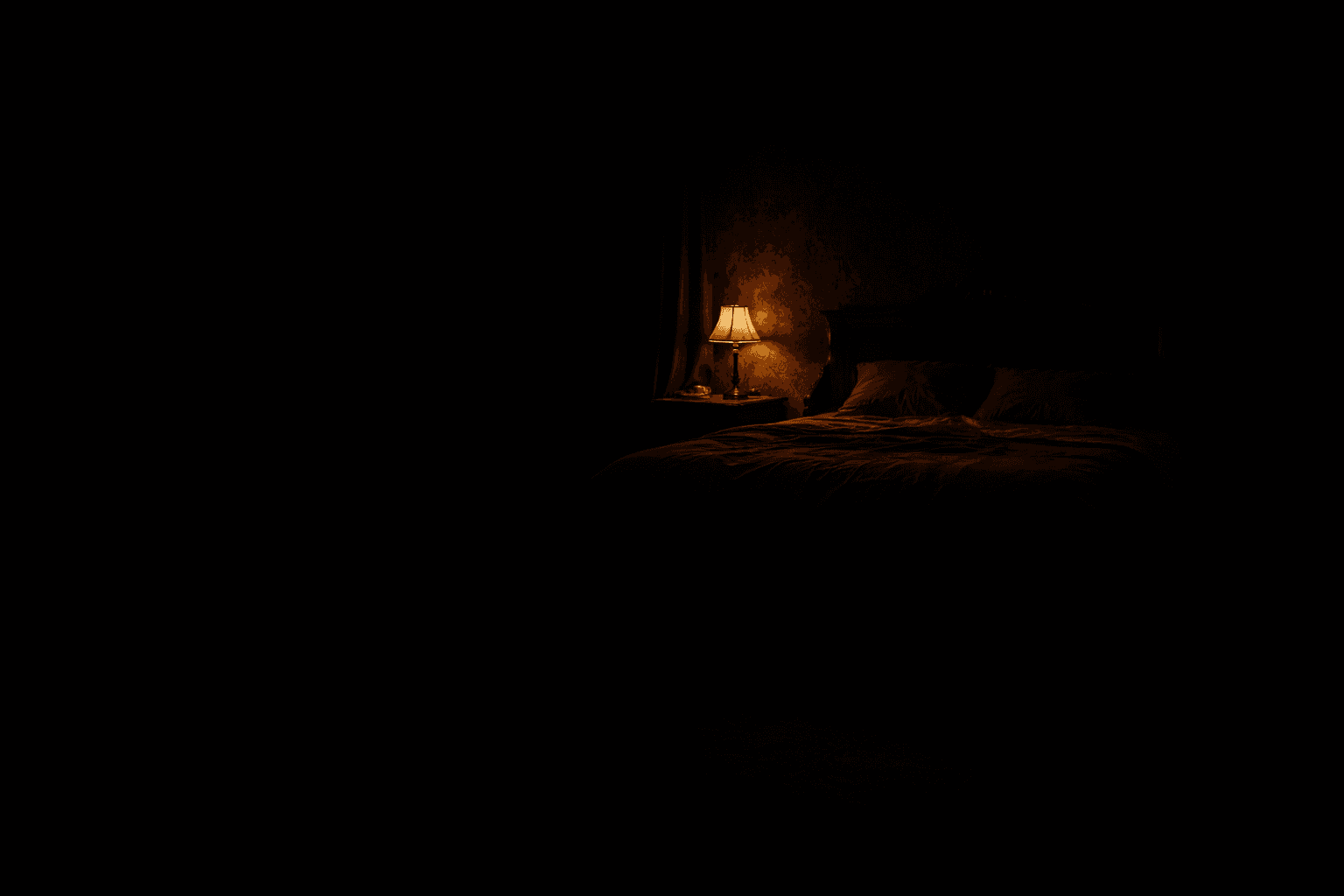
Most rooms reveal everything at once. Every corner is visible. Nothing holds shadow.
A gothic bedroom is defined by what is not illuminated.
Light should arrive in parts, not all at once.
Execution:
Use a single dominant light source
Avoid overhead lighting where possible
Allow the edges of the room to fall into shadow
The full structure for controlling light is outlined here:
Start Here The 7-Step Gothic Room Transformation
Step 3 Anchor the Room with One Surface
Principle: Every bedroom needs one place that holds weight.

Without a grounded surface, a desk, table, or nightstand, the room remains visually unsettled. Everything floats.
This surface is not decorative. It exists to stabilize the space.
Execution:
Choose one surface to remain consistent
Keep the number of objects minimal
Avoid arranging objects to be seen
A surface begins to settle when it holds something that does not compete with it.
A small metal tray like this creates structure without drawing attention.
Step 4 Keep the Walls Quiet
Principle: Walls should support the room, not perform within it.
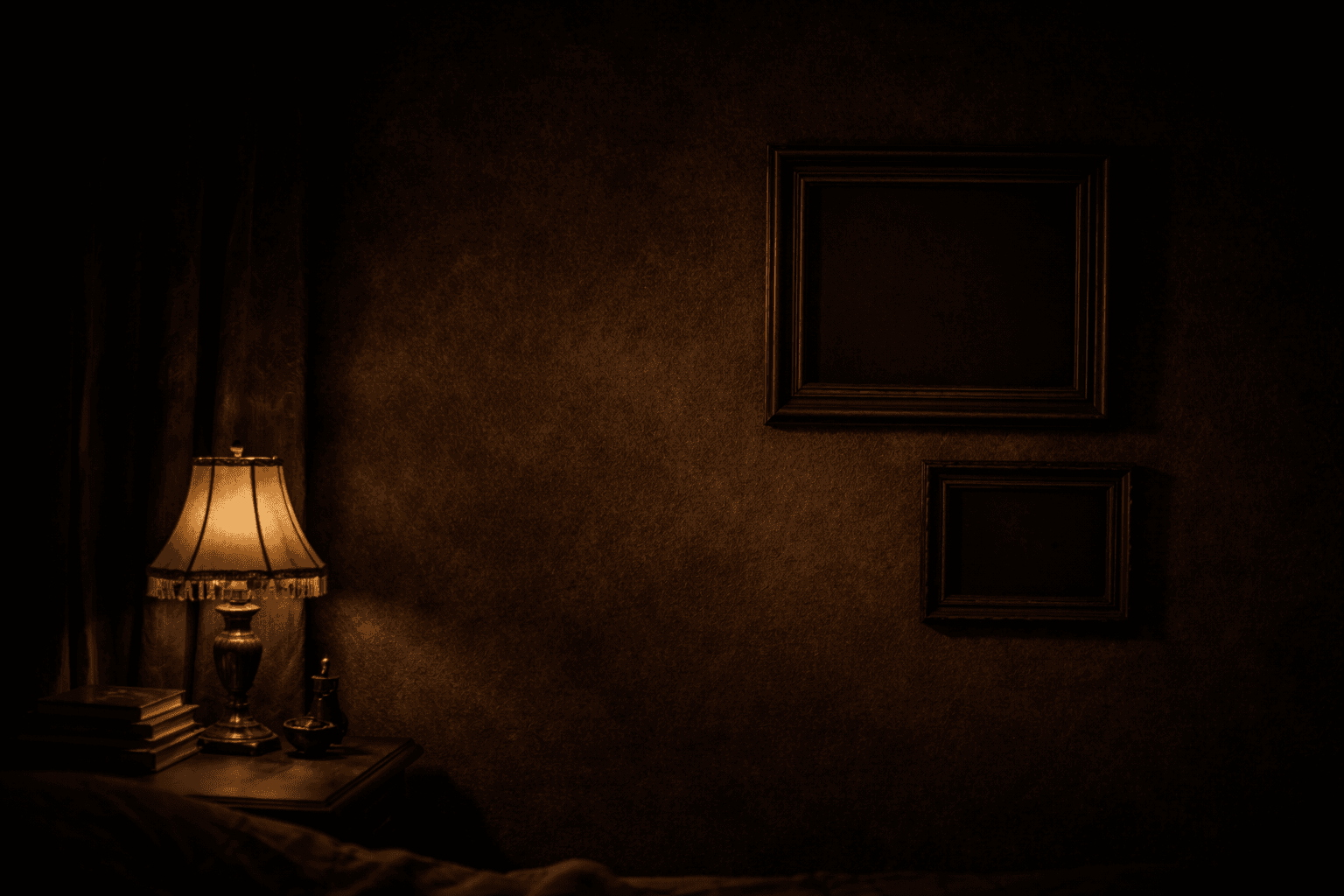
Overfilled walls create constant visual interruption. Even well-chosen artwork loses its effect when surrounded by too much.
A gothic bedroom benefits from restraint more than display.
Execution:
Limit the number of frames or wall elements
Allow empty space to remain
Favor darker tones that sit back rather than stand forward
The room gains depth when the walls stop asking to be seen.
Step 5 Let the Room Remain Slightly Unfinished
Principle: A bedroom should never feel complete.
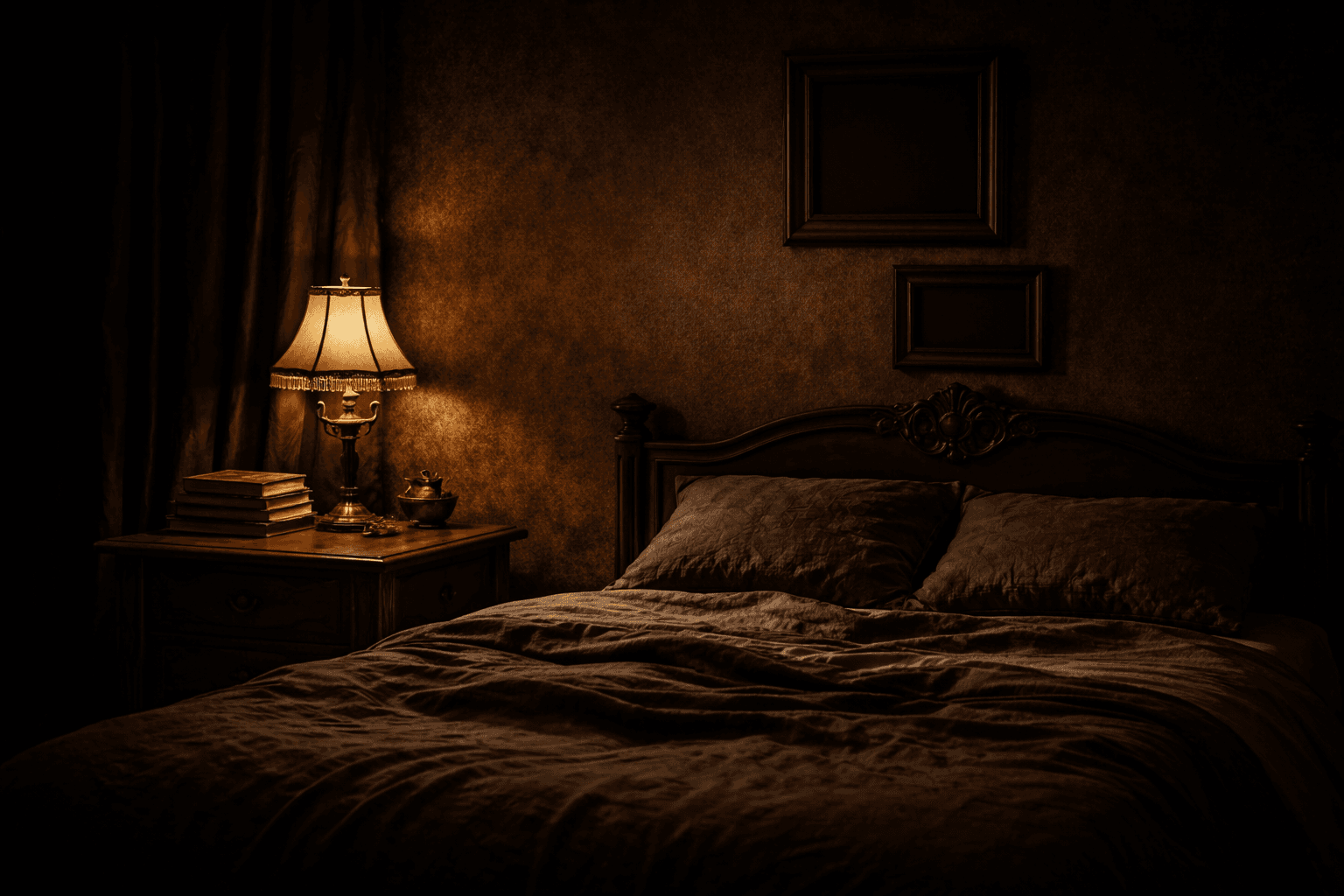
Completion makes a room rigid. It suggests nothing more can change.
The strongest interiors remain slightly unresolved. They leave room for adjustment, removal, and time.
Execution:
Make one change at a time
Live with each decision before adding another
Remove anything that begins to feel unnecessary
Time is what gives a room credibility. Without it, everything feels recently placed.
Closing Note
A gothic bedroom is not defined by darkness, but by control.
When the bed recedes, light is contained, and objects are reduced to what matters, the room no longer feels arranged.
It feels settled.
Not finished. Not styled.
Held.
Where to Go Next
The full structure for building a room like this is outlined here:
Start Here -The 7-Step Gothic Room Transformation